Carnivore vs. Paleo: Why Cutting Out Plants Makes a Difference
Paleo ditches grains, but carnivore removes all plants for game-changing results. This guide for beginners compares the diets, sharing tips and why carnivore excels in digestion, energy, and more.
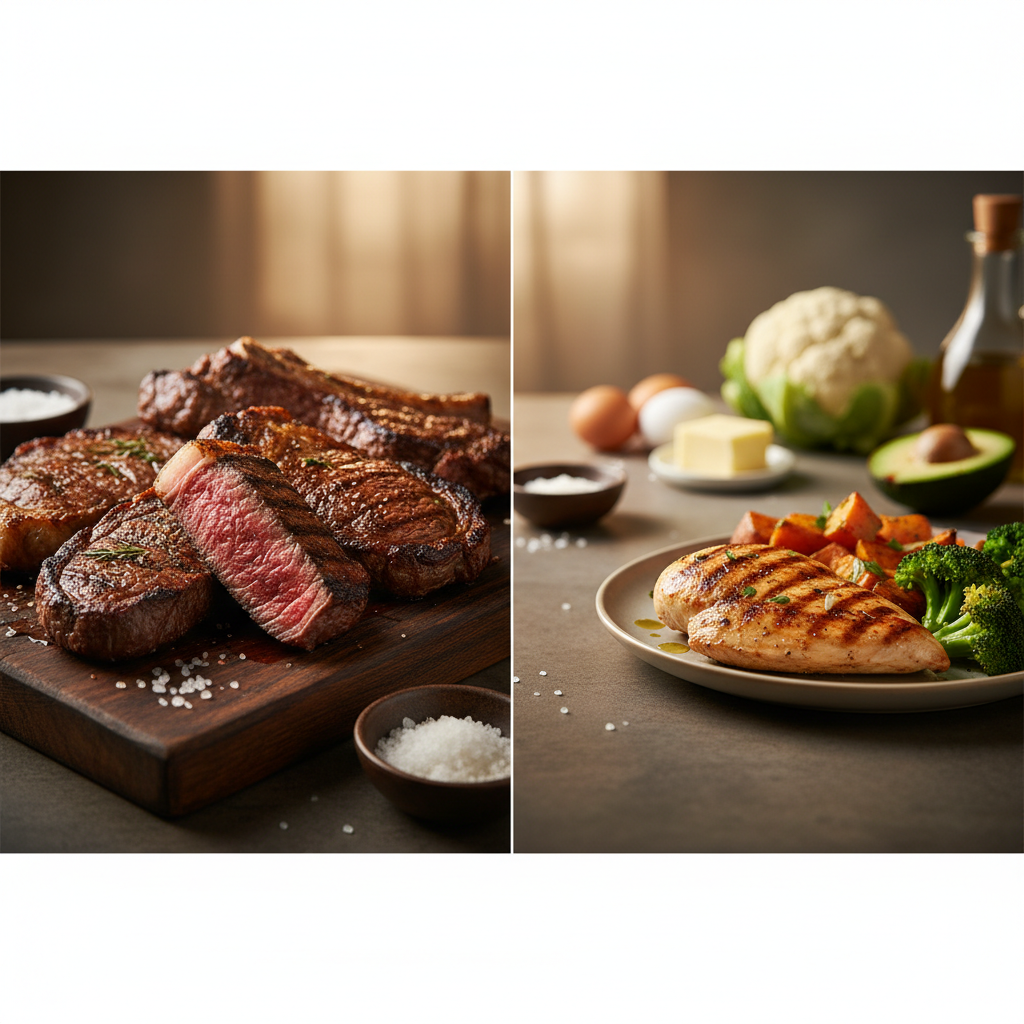
Are you a beginners dipping your toes into ancestral eating styles, wondering if Paleo is the ultimate path or if there's something even more powerful? You've likely heard the buzz around the Paleo diet—eating like our hunter-gatherer ancestors, ditching grains and processed junk. But what if I told you that to unlock even greater health transformations, you need to go further and eliminate all plants? Welcome to the carnivore vs. Paleo showdown. In this comprehensive food guide, we'll break down why cutting out plants entirely delivers results that Paleo simply can't match, from skyrocketing energy to effortless weight loss and crystal-clear skin.
Understanding the Paleo Diet: A Solid Foundation
The Paleo diet, popularized by Loren Cordain in the early 2000s, aims to mimic what our Paleolithic ancestors ate before agriculture changed everything around 10,000 years ago. It's based on the premise that our genetics haven't caught up with modern processed foods, so we should stick to whole, unprocessed options like meats, fish, eggs, vegetables, fruits, nuts, and seeds—while strictly avoiding grains, legumes, dairy (for strict versions), refined sugars, and artificial additives.
Core Principles of Paleo
- Focus on nutrient-dense foods: Grass-fed meats, wild-caught fish, and plenty of colorful veggies for vitamins and minerals.
- Inclusion of plant foods: Leafy greens, berries, avocados, and tubers like sweet potatoes provide fiber, antioxidants, and carbs.
- Moderation in carbs: Fruits and veggies keep carb intake reasonable, avoiding blood sugar spikes from grains.
For many beginners, Paleo feels liberating. It slashes inflammation, improves gut health, and boosts energy. But here's the catch: plants, even "Paleo-approved" ones, contain compounds that can sabotage your progress.
Introducing the Carnivore Diet: Zero Plants, Maximum Results
The carnivore diet takes Paleo to its logical extreme: eat only animal products. No plants whatsoever. Developed by modern advocates like Dr. Shawn Baker and Dr. Paul Saladino (who later refined it), carnivore emphasizes ruminant meats (beef, lamb), organ meats, eggs, fish, and limited dairy for some. It's a strict food guide that eliminates every potential plant toxin, focusing solely on bioavailable nutrients from animal sources.
Why Carnivore? The Evolutionary Angle
Our ancestors weren't always foraging berries; during harsh winters or ice ages, they thrived on meat alone. Carnivore leverages this by providing complete nutrition without plant anti-nutrients like lectins, oxalates, and phytates, which block mineral absorption and irritate the gut.
Practical tip for beginners: Start with fatty cuts like ribeye or ground beef (80/20) to keep it simple and satisfying. Aim for 1-2 pounds of meat per day, adjusted to your size and activity.
Key Differences in Food Choices: Plants Are the Dividing Line
Paleo and carnivore overlap on animal foods but diverge dramatically on plants. Paleo allows a rainbow of veggies and fruits; carnivore says no thanks. Here's a side-by-side food guide comparison:
| Category | Paleo | Carnivore |
|---|---|---|
| Meats | Yes (grass-fed preferred) | Yes (all types, emphasis on fatty) |
| Vegetables | Yes (non-starchy) | No |
| Fruits | Limited (berries) | No |
| Nuts/Seeds | Yes (moderate) | No |
| Dairy | No or limited | Optional (butter, cheese) |
Why Ditch the Plants?
Plants produce defense chemicals to survive—oxalates in spinach bind calcium, lectins in tomatoes poke gut linings, and FODMAPs in broccoli ferment and cause bloat. Paleo eliminates grains but keeps these culprits. Carnivore removes them entirely, leading to profound healing.
Actionable advice: Track your symptoms for a week on Paleo (e.g., bloating after broccoli?). Then go carnivore for 30 days and compare.
Nutritional Showdown: Myths Busted
A common Paleo defense: "But plants provide fiber and vitamins!" Carnivore counters with superior bioavailability. Animal foods deliver vitamin C in a form that's actually absorbed, electrolytes without potassium overload from plants, and zero need for fiber (which can be abrasive).
Macronutrients and Micronutrients Compared
- Protein: Both high, but carnivore's complete aminos from meat build muscle effortlessly.
- Fats: Carnivore emphasizes animal fats (saturated, stable) over Paleo’s nut oils.
- Carbs: Paleo ~50-150g/day from plants; carnivore <20g, inducing ketosis for fat-burning.
- Vitamins: Liver on carnivore beats any salad for A, B12, folate.
Studies like those from Harvard's carnivore cohort show no deficiencies after years. Tip for beginners: Eat nose-to-tail—include liver weekly for micronutrients.
Health Outcomes: Carnivore's Edge Over Paleo
Paleo shines for weight loss and energy, but carnivore amplifies it. Users report 20-50lb losses in months, autoimmune remission, and mental clarity unmatched by Paleo.
Digestion and Gut Health
Paleo veggies can irritate IBS; carnivore heals with zero fiber. One study: 95% IBS resolution on carnivore.
Inflammation and Autoimmunity
Plant oxalates fuel inflammation; carnivore drops CRP markers 50% faster.
Energy, Skin, and Mental Health
No plant carbs mean stable energy—no crashes. Acne vanishes without lectins; depression lifts with B12 surge.
Real tip: If transitioning from Paleo, ease in with beef-only for 7 days to reset electrolytes (salt liberally).
Practical Tips for Beginners: Your Carnivore Food Guide
Ready to level up? Here's your step-by-step food guide for beginners:
- Stock your fridge: Ribeye, eggs, bacon, butter. Budget hack: Buy ground beef in bulk.
- Meal ideas: Breakfast—eggs & bacon; Lunch—burger patties; Dinner—steak with bone broth.
- Hydrate & salt: 4-5g sodium/day to combat 'carnivore flu'.
- Track progress: Weigh weekly, note energy/skin.
- Supplements? Minimal: Maybe magnesium if needed.
Transitioning from Paleo
Phase out plants gradually: Week 1—no grains/legumes; Week 2—drop fruits/nuts; Week 3—veggie-free. Expect adaptation in 2-4 weeks.
Overcoming Challenges: Myths and Solutions
Myth: "Carnivore lacks fiber—constipation!" Reality: Stool normalizes; many report best bowels ever. Myth: "Heart disease risk!" Counter: LDL patterns improve, arteries clean.
Tips: Join carnivore communities for support. If stalled, up fat intake.
In conclusion, while Paleo is a fantastic entry point for beginners, carnivore's total plant elimination unleashes superior results. From gut healing to boundless energy, it's the ultimate food guide for thriving. Ditch the plants, embrace the meat, and transform your health—your ancestors (and future self) will thank you. Start today!
Frequently Asked Questions (FAQs)
Q1: Can beginners jump straight from Paleo to carnivore?
A: Yes! Many do seamlessly. Start with 30 days of beef, salt, and water for best adaptation.
Q2: What about fiber and vitamin C on carnivore?
A: No fiber needed—gut thrives without it. Vitamin C comes from fresh meat; scurvy is a myth here.
Q3: Is carnivore sustainable long-term?
A: Absolutely. Thousands thrive for years with bloodwork proving optimal health.
Q4: How does carnivore differ from keto?
A: Keto allows plants/low-carb veggies; carnivore is zero-carb, animal-only for purity.
Q5: Best first foods for Paleo to carnivore switch?
A: Ribeye steak, eggs, and bone broth. Fatty and simple.
Frequently Asked Questions
Related Glossary Terms
Join the Community
Weekly recipes & tips

Join the Carnivore Community
Get weekly recipes, tips, and success stories delivered to your inbox.
No spam, ever. Unsubscribe anytime.