How Much Meat Should You Eat? Calculating Your Daily Macros
Struggling with carnivore macros as a beginner? Learn to calculate daily protein and fat from meat based on body weight. Get sample plans, tracking tips, and decide if you need to track.
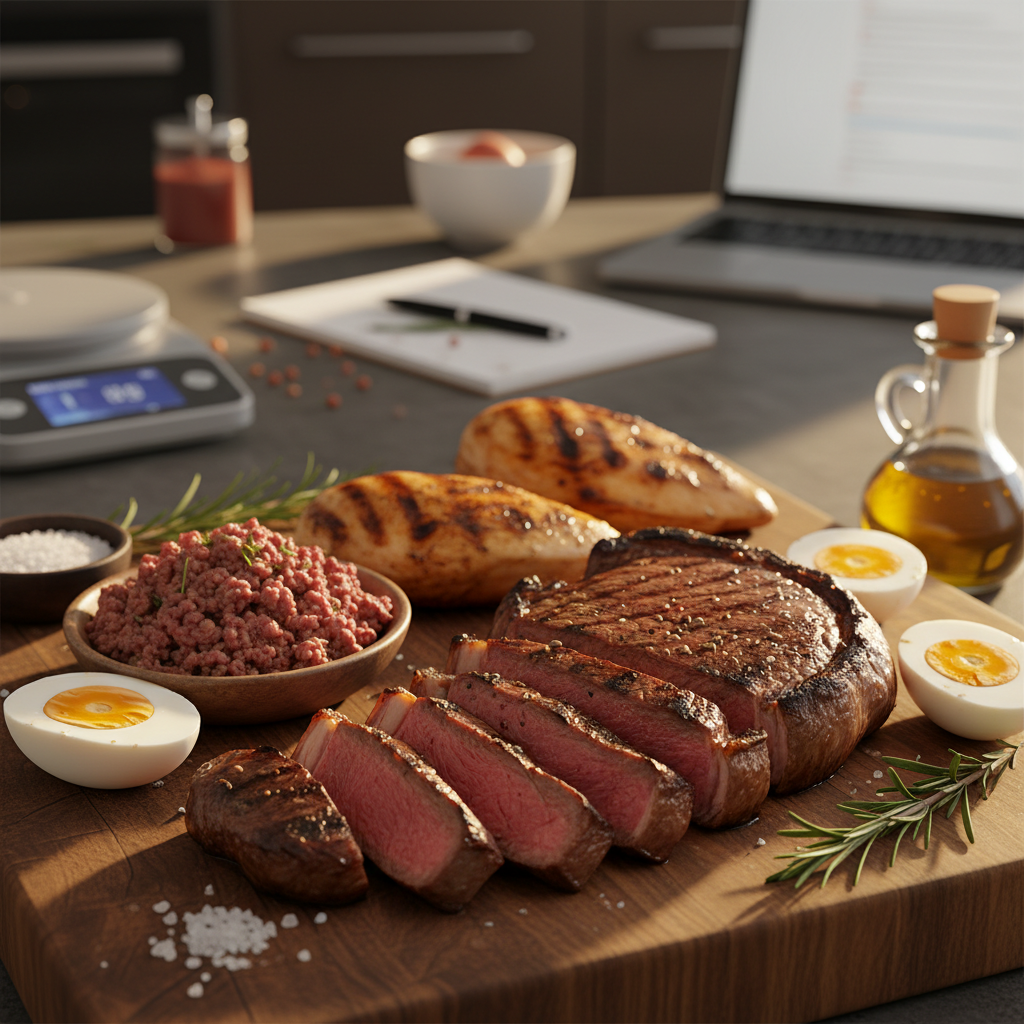
Embarking on a carnivore diet as a beginner can feel overwhelming, especially when it comes to figuring out how much meat you should eat each day. One of the most common questions we get at The Daily Carnivore is about calculating your daily macros—specifically protein and fat intake based on body weight. In this guide, we'll break it down step-by-step with practical, actionable advice to help you optimize your carnivore journey without the guesswork.
Understanding Macros on a Carnivore Diet
On a carnivore diet, macros boil down to two essentials: protein and fat. Carbs are virtually eliminated, making meat your primary source of both nutrients. Protein builds and repairs muscle, while fat provides sustained energy and supports hormone production. For beginners, grasping these macros is key to avoiding under-eating protein (which can lead to muscle loss) or overdoing fat (which might stall weight loss).
Typical carnivore macro splits range from 20-30% protein and 70-80% fat by calories, but gram-for-gram calculations based on body weight offer a more precise starting point. This approach ensures you're fueling your body efficiently, whether your goal is fat loss, muscle gain, or maintenance.
The Role of Protein in Your Daily Intake
Protein is non-negotiable. It supplies essential amino acids that your body can't produce on its own. On carnivore, you'll get it mostly from beef, pork, chicken, fish, and organ meats. Aim for high-quality, fatty cuts to naturally balance macros.
Fat as Your Energy Powerhouse
Fat isn't the enemy—it's your friend on zero-carb carnivore. It keeps you satiated, supports brain function, and prevents the 'keto flu' many experience transitioning from carb-heavy diets.
Why Protein and Fat Ratios Matter for Beginners
For beginners diving into macros, ratios provide a simple framework. A common starting ratio is 1:2 protein to fat by grams—1 gram of protein per pound of body weight, with 2 grams of fat. This ensures adequate protein for muscle preservation while providing enough fat for energy.
Why does this matter? Too little protein can cause fatigue and muscle wasting; too much without fat leads to digestive issues. Ratios adapt to goals: leaner ratios (more protein) for weight loss, fattier for bulking or high activity.
- Weight Loss: 1.2g protein/lb body weight, 1.5g fat/lb.
- Muscle Gain: 1.5g protein/lb, 2g fat/lb.
- Maintenance: 1g protein/lb, 1.5-2g fat/lb.
These ratios are flexible—listen to your body. Satiety is your best guide after the adaptation phase.
Step-by-Step: Calculating Your Daily Protein Intake
Calculating protein is straightforward and body weight-based, making it ideal for beginners. Here's the formula:
Daily Protein (grams) = Body Weight (lbs) × Protein Factor
Protein factor varies:
- Sedentary beginners: 0.8-1g/lb
- Moderately active: 1-1.2g/lb
- Athletes: 1.2-1.6g/lb
Example Calculations
Let's say you're a 180 lb beginner with light activity:
- Protein: 180 × 1 = 180g
Sources: 1 lb ribeye steak = ~100g protein; 8 oz ground beef = ~50g. You'd need about 1.8 lbs of steak daily, but mix cuts for variety.
For a 150 lb woman aiming for maintenance: 150 × 0.9 = 135g protein. Practical tip: Use a food scale initially to hit targets accurately.
Adjusting for Lean Body Mass
Advanced beginners can refine using lean body mass (LBM). Estimate LBM = Body Weight - (Body Fat % × Body Weight). Protein: 1.6-2.2g per kg LBM. Tools like calipers or DEXA scans help, but body weight suffices for starters.
Determining Your Optimal Fat Intake
Fat calculation follows protein. Once protein is set, fat fills the caloric gap. Rule of thumb: 2-3x protein grams in fat for satiety.
Daily Fat (grams) = (Protein grams × 2-3) or based on total calories.
Total calories = Protein grams × 4 + Fat grams × 9. For 2000 kcal: ~150g protein (600 kcal), ~200g fat (1800 kcal).
Practical Fat Sources
Opt for fatty meats: 80/20 ground beef (17g fat/4oz), bacon (high fat), butter on steaks. Tip: Cook in tallow or lard to boost intake effortlessly.
Signs You're Getting It Right
- Stable energy
- No cravings
- Regular bowels
Under-fat: Dry mouth, low energy. Over-fat: Loose stools. Adjust weekly.
Tools and Methods for Tracking Macros
Tracking macros demystifies carnivore for beginners. Free apps like Cronometer or Carb Manager log meats accurately—search USDA database for precision.
Manual method: Printable charts. 4oz beef = 30g protein/20g fat. Scale meats pre-cook for 90% accuracy.
Pros and Cons of Tracking
| Method | Pros | Cons |
|---|---|---|
| Apps | Fast, detailed | Learning curve |
| Hand Calculations | No tech needed | Time-intensive |
| Eat to Satiety | Intuitive | Inaccurate initially |
Start tracking for 2 weeks, then intuitive eating.
Is Tracking Macros Necessary on Carnivore?
For many, no—carnivore's simplicity shines here. Eat meat to satiety, prioritizing ruminants. But beginners benefit from tracking to learn portions and avoid pitfalls like rabbit starvation (lean meat overload).
Actionable advice: Track 14 days, note energy/weight. If stable, ditch the app. Revisit if goals change.
- Tip 1: Weigh weekly, adjust macros 10% if needed.
- Tip 2: Include salt/electrolytes—macros alone aren't enough.
- Tip 3: Experiment: One week high protein, log results.
Sample Daily Macro Plans for Different Goals
Here are plug-and-play plans for a 180 lb male/female beginner.
Weight Loss (180g protein, 150g fat ~2100 kcal)
- Breakfast: 8oz ribeye (60g pro/50g fat)
- Lunch: 12oz ground beef patties (70g pro/60g fat)
- Dinner: 8oz salmon (50g pro/40g fat)
Total meat: ~3 lbs.
Muscle Gain (220g protein, 250g fat ~2900 kcal)
- Breakfast: 12oz bacon/eggs equivalent
- Lunch: 1lb fatty brisket
- Dinner: Steak + butter
- Snack: Beef liver pate
Maintenance (160g protein, 200g fat ~2400 kcal)
Mix beef, pork, fish. Add bone broth for minerals.
Scale to your weight: Multiply portions by (your lbs/180).
Common Mistakes and Pro Tips for Success
Avoid these beginner traps:
- Mistake 1: All lean meat—add fat!
- Mistake 2: Ignoring activity—up protein 20% if training.
- Mistake 3: Static tracking—recalc every 10 lbs lost.
Pro tips:
- Batch cook weekly.
- Hydrate: 1 gallon water/day.
- Supplements: Minimal—magnesium if cramping.
- Community: Join carnivore forums for macro tweaks.
With these tools, mastering carnivore macros becomes second nature.
Conclusion
Calculating your daily macros doesn't have to be complicated. By basing protein on body weight and balancing with fat, beginners can thrive on carnivore—gaining energy, shedding fat, and simplifying meals. Start with the formulas, track briefly, then eat intuitively. Your body will thank you. Ready to dial in your meat intake? Grab a scale, pick your cuts, and carnivore on!
Frequently Asked Questions
Related Glossary Terms
Join the Community
Weekly recipes & tips

Join the Carnivore Community
Get weekly recipes, tips, and success stories delivered to your inbox.
No spam, ever. Unsubscribe anytime.